Chart of the month: Looking beyond traditional asset classes

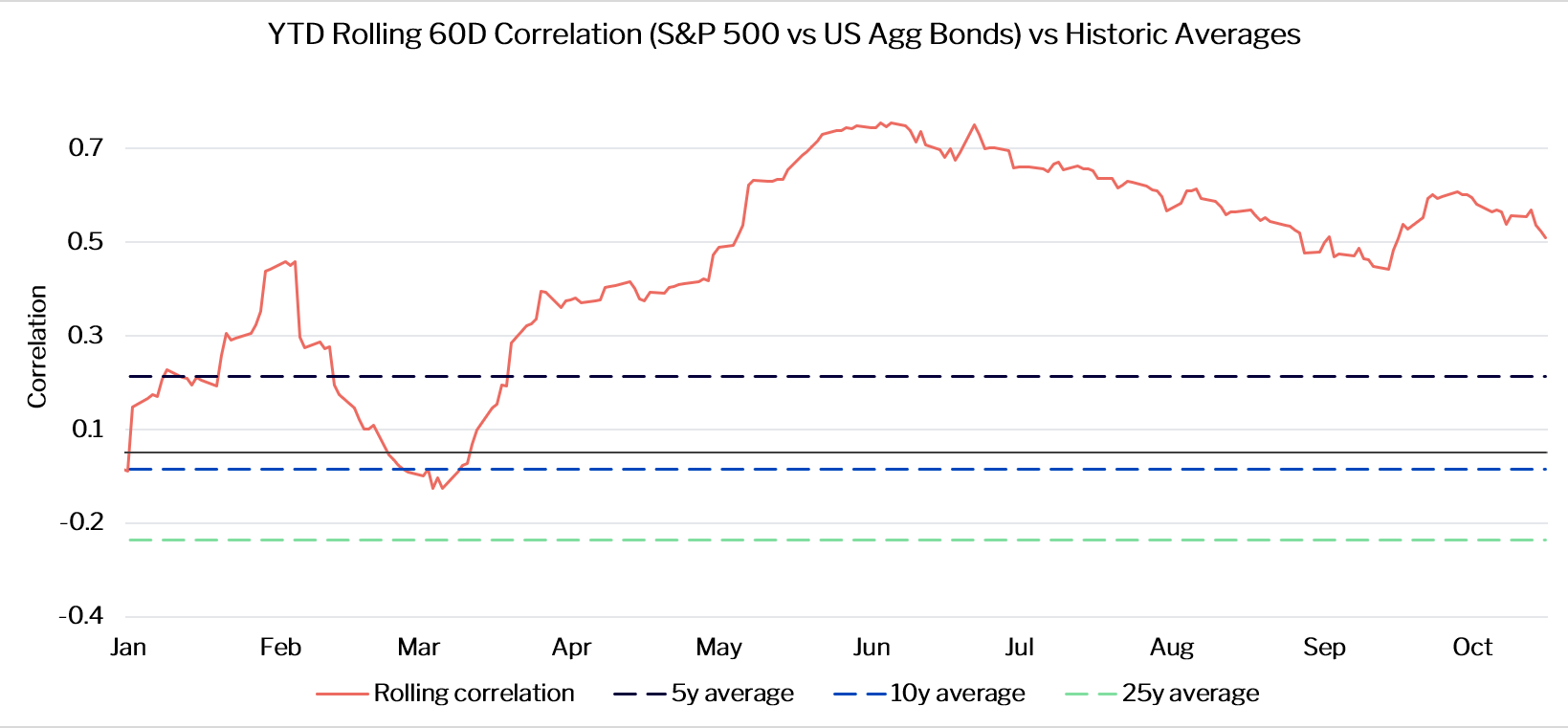
This chart tracks the 60-day rolling correlation between daily returns on the S&P 500 (Gross Return) and the Bloomberg US Aggregate bond index, in USD, using 25 years of daily data (Oct 2001 – Oct 2026).
What this chart shows
The dashed lines show the historic averages over three horizons: roughly −0.19 over 25 years, −0.04 over the last 10, and +0.16 over the last 5. In other words, in recent history, bonds tended to move against equities. This is precisely why the classic 60/40 portfolio worked, with bonds cushioning the blow when stocks fell. But the steady climb from −0.19 to +0.16 as the window shortens, shows that the relationship has been drifting the wrong way for some time, and even flipping in the last 5 years.
Since 2021 the correlation has spent most of its time above all three averages and has repeatedly pushed above +0.4. YTD it has climbed from around zero in March to a peak near +0.7 in June, sitting at roughly +0.5 today, well above even the five-year average. Bonds and equities are now rising and falling together far more often than history would suggest.
Why is this relevant
This matters for portfolio construction. If the bond sleeve no longer reliably offsets equity drawdowns, a two-asset portfolio is less diversified than its weights imply. This is the case for widening the opportunity set to asset classes whose return drivers differ from both stocks and bonds: commodities being the obvious example, given their sensitivity to inflation and supply shocks (the very environment in which stocks and bonds tend to fall together), alongside alternatives and other diversifiers. The goal is not to abandon bonds but to stop relying on a single relationship that the data shows is very dynamic.

Sid Soni
Investment Analyst
Source: FactSet, as at 16/10/2026.
Historical performance is not an indication of future performance and any investments may go down in value.

